

Three questions you can memorize right now: "What's something you've been looking forward to lately?" "What did you do last weekend that you actually enjoyed?" "If you could be anywhere right now, where would you be?" The one-line strategy that makes them work: ask out of genuine curiosity, then actually listen to the answer before reaching for the next question.
Here's your quick starter set by mood:
- Light and easy: "What's been the best part of your week?"
- Inquisitive: "What's something you've been obsessing over recently?"
- Playful: "What's the most spontaneous thing you've done in the last year?"
The rest of this guide unpacks every category you'll need, from warm openers to closing scripts, with expert-backed tips on tone and timing throughout.
Key Takeaways
The most effective first date questions are open-ended, curiosity-driven, and followed by genuine listening rather than the next scripted prompt.
| Point | Details |
|---|---|
| Start with low-stakes openers | Use story-inviting questions in the first 10 minutes before moving to values or intentions. |
| Follow one emotional thread | Pick the most interesting part of their answer and pull on it before asking anything new. |
| Share something reciprocal | Pair each question with a brief personal anecdote to keep the exchange two-way and comfortable. |
| Ask about intentions tactfully | Phrase relationship-goal questions as "what are you hoping to find?" rather than direct dealbreaker lists. |
| Close with a specific invitation | End with a concrete next-step offer tied to something they mentioned, not a vague "we should do this again." |
Table of Contents
- 1. Light openers that warm up the conversation
- 2. Interests and hobbies: questions that make people light up
- 3. Values, beliefs, and life priorities: gentle prompts that reveal alignment
- 4. Intentions and relationship fit: tactful ways to ask about goals
- 5. Flirty and intimate: playful prompts that invite chemistry
- 6. Fun hypotheticals and creative prompts to spark imagination
- 7. Closing the date and deciding next steps
- 8. How to ask: tone, pacing, and avoiding the interview vibe
- 9. Questions to avoid and red flags to watch for
- 10. Expert-backed tips: what therapists and dating coaches recommend
- 11. What actually works when you test these questions in real dates
- Sources
1. Light openers that warm up the conversation
The first 5–10 minutes set the emotional temperature for everything that follows. Low-stakes questions that invite a short story work better than direct questions that demand a considered answer before someone's comfortable.
- "What's something you've been looking forward to this week?"
- "What's the last thing that genuinely made you laugh?"
- "What did you do last weekend that you actually wanted to do?"
- "What's a place you've been to recently that surprised you?"
- "What's your go-to way to decompress after a rough day?"
- "What's the last show or podcast you couldn't stop talking about?"
- "What's something small that made today better?"
- "What was the high and low of your day?" (A specific swap for "How was your day?" that forces a real story instead of a one-word answer.)
Avoid yes/no traps. "Did you have a good week?" gets you "Yeah, pretty good." "What made this week feel different from last week?" gets you a story. Mirror their energy level too: if they're relaxed and funny, match it; if they're a little nervous, keep your tone warm and unhurried.
2. Interests and hobbies: questions that make people light up
Passion questions are the most reliable conversation fuel on a first date. When someone talks about something they genuinely love, their body language opens up, their answers get longer, and you get natural material for follow-ups.
- "What's a hobby you've picked up in the last couple of years?"
- "What do you do with your free time when you have no obligations at all?"
- "Is there something you're working on right now that excites you?"
- "What's a skill you've always wanted to learn but haven't yet?"
- "What kind of music do you actually listen to when nobody's judging?"
- "What's the last book, film, or show that genuinely moved you?"
- "Do you have a creative outlet? What does that look like for you?"
- "What's something you do just for yourself that most people don't know about?"
Pro Tip: Instead of "What do you do for work?" try "What's something about your work that actually energizes you?" It surfaces career information naturally, reveals motivation, and avoids the job-interview feel that kills early chemistry. Practitioners call this an "entrypoint" question — it opens a door rather than demanding a résumé.
When they describe a hobby or passion, that's your opening to suggest a second date. They love hiking? "There's a trail near the reservoir I've been meaning to check out." You've just turned an answer into a plan. Veyadate's activity-based date ideas are worth bookmarking for exactly this moment.
3. Values, beliefs, and life priorities: gentle prompts that reveal alignment
These questions carry more weight, so timing matters. Use them only once the conversation has found a rhythm, usually 20–30 minutes in. Phrasing them as "how do you feel about..." rather than "do you believe in..." keeps them open and removes the pressure of a right or wrong answer.
- "How do you feel about where you're living right now? Is it home, or is it temporary?"
- "What does a good friendship look like to you?"
- "How do you tend to handle it when something goes wrong that's outside your control?"
- "What's something you've changed your mind about in the last few years?"
- "How important is family to you on a day-to-day basis?"
- "What does a meaningful weekend look like for you?"
- "What are you currently trying to improve about yourself?" (Questions about growth orientation tend to predict how someone handles conflict and change in a relationship.)
- "What's something you feel strongly about that most people in your life disagree with?"
After they answer, resist the urge to immediately ask the next question. A simple "That's interesting — what made you feel that way?" deepens the answer without adding pressure. Share a brief, related thought of your own to keep it reciprocal.
4. Intentions and relationship fit: tactful ways to ask about goals
Asking about relationship goals doesn't have to be awkward. Dating coaches recommend surfacing this early enough to avoid wasting time on mismatched intentions, but the phrasing is everything.
- "What are you hoping to find from dating right now?"
- "Are you at a point where you're looking for something serious, or are you keeping it open?"
- "What does a healthy relationship look like to you?"
- "What's something that's been a dealbreaker for you in the past?"
- "How do you feel about long-distance, hypothetically?"
- "What's something you need in a relationship that you've learned the hard way?"
Timing guidance: If the date is going well and feels natural, these questions fit around the midpoint. If you need clarity faster, lead with the softer version: "What are you hoping to get out of dating these days?" It's direct without feeling like an interrogation.
If they seem uncomfortable, pivot: "No pressure on that one — I'm just curious what you're looking for generally. We can talk about something else." That script acknowledges the question without abandoning it entirely.
5. Flirty and intimate: playful prompts that invite chemistry
Flirty questions work best when they're low-stakes and easy to deflect. The goal is to test mutual attraction while keeping the other person comfortable enough to play along.
- "What's something you find attractive that most people wouldn't expect?"
- "What's the most memorable date you've ever been on?"
- "Do you believe in chemistry on a first meeting, or does it take time for you?"
- "What's something you're surprisingly good at?"
- "What's your idea of a perfect evening with someone you actually like?"
- "What's one thing you'd want someone to know about you before a second date?"
Read the signals before going here. If they're leaning in, making eye contact, and laughing easily, these land well. If they seem guarded or distracted, stay in the interests and values territory a little longer.
A playful follow-up that keeps things fun: after they answer "What's something you're surprisingly good at?", try "Okay, I'm going to need a demonstration at some point." It's light, it implies a next meeting, and it's easy to walk back if the energy isn't there.

6. Fun hypotheticals and creative prompts to spark imagination
Hypotheticals reveal how someone thinks, what they value, and whether they have a sense of humor, all without any real vulnerability required. They're also the best reset button when conversation hits a lull.
- "If you could live anywhere in the world for one year, where would you go and why?"
- "What superpower would you choose, and what would you actually use it for?"
- "If you had a completely free weekend with no obligations and unlimited budget, what would you do?"
- "What three people, living or dead, would you invite to a dinner party?"
- "If you had to switch careers tomorrow, what would you do?"
- "What's a skill you'd want to master if time wasn't a factor?"
- "If you could only eat one cuisine for the rest of your life, what would it be?"
Use hypotheticals when a topic runs dry or when the conversation has been heavy for a few minutes. They reset the mood without making the shift feel abrupt.
The dinner-party question is particularly useful: their three guests tell you a lot about who they admire and what they find interesting. And if they pick a chef or a musician, that's your opening. "You'd invite Bourdain? We should probably find a really good restaurant for the next one."

7. Closing the date and deciding next steps
How you end a date matters as much as how you start it. A clean, confident close leaves a better impression than trailing off into "well, I guess I should get going."
Six closing lines:
- "I've really enjoyed this. I'd love to do it again."
- "This went by way too fast. Are you free next week?"
- "I had a great time tonight. Thanks for making it easy to talk."
- "I wasn't sure what to expect, but this was genuinely fun."
- "You're good company. We should do this again."
- "I'd like to see you again. Is that something you'd want?"
Four next-step templates:
- "There's a [specific place/activity] I've been wanting to try. Would you want to come?"
- "You mentioned you love [X] — I know a great spot. Want to check it out?"
- "I'm going to [event/activity] on [day]. You should join me."
- "Let's pick a day this week. What does your schedule look like?"
Reading the cues: If they've been engaged, made future references ("we should try that place"), and aren't rushing to leave, another date is likely wanted. If answers got shorter and they've checked their phone a few times, keep the close warm but don't push for a specific plan.
Graceful exit if it's not a match:
- "I'm really glad we met. Take care of yourself."
- "It was great getting to know you a little. Safe travels home."
Short, warm, no false promises. That's the standard.
8. How to ask: tone, pacing, and avoiding the interview vibe
The questions matter less than how you use them. A three-step micro-framework keeps the conversation feeling natural: opener → follow one emotional thread → share a short reciprocal anecdote.
Ask one question. When they answer, pick the most interesting thread in their response and pull on it with a follow-up. Then share something brief from your own experience before asking anything new. That rhythm prevents the rapid-fire feel that makes dates feel like job interviews.
Follow-up example pairs:
- They say they've been hiking more lately. Follow-up: "What got you into it? Was there a specific trip that hooked you?"
- They mention they've been stressed at work. Follow-up: "How do you usually decompress when it gets like that?"
- They say they've been learning to cook. Follow-up: "What's the most ambitious thing you've made so far?"
On pacing: a rough guide is two questions for every personal share. Ask, listen, follow up, then offer something of your own. Therapists recommend pairing a question with a brief personal share to model openness and keep the exchange two-way.
Pro Tip: When a topic runs dry, don't panic and fire another question. Pause, reflect something back: "That's actually really interesting — I hadn't thought about it that way." A moment of genuine reflection is more attractive than a rapid pivot to the next item on your mental list.
If an answer is a dead end ("I don't know, I just like it"), acknowledge it briefly and move to a different topic. "Fair enough — what else have you been into lately?" No awkwardness required.
9. Questions to avoid and red flags to watch for
Some questions shut conversations down before they start. Others reveal more about the asker than the person being asked.
Questions to avoid on a first date:
- "Why did your last relationship end?" (Too heavy, too soon, and the answer rarely helps you.)
- "How much do you make?" or anything about finances.
- "Do you want kids?" before any real rapport exists.
- "What are your dealbreakers?" (Phrased directly, it sounds like a checklist.)
- "Are you over your ex?" (Almost always backfires.)
- "Why are you still single?" (Implies something is wrong with them.)
Experts advise pacing sensitive topics and using interest-based questions first. Heavy questions asked too early don't get honest answers anyway; they get defensive ones.
Red flags to notice in answers and body language:
- They speak about exes with contempt or blame exclusively.
- Every story about their life centers on what others did wrong.
- They deflect every personal question with humor or a counter-question.
- They check their phone repeatedly without acknowledging it.
- They give one-word answers to open-ended questions and don't ask anything back.
Pivot scripts when a question backfires:
- "That was a bit heavy for a first date — let me ask you something more fun."
- "Never mind that one. Tell me something good that happened this week."
- "Let's come back to that. What's something you're excited about right now?"
10. Expert-backed tips: what therapists and dating coaches recommend
The best first date questions share a common structure: they invite a story, not a verdict. Esther Perel, one of the most cited relationship therapists working today, recommends open-ended prompts that open gates to stories rather than putting someone on the spot.
Two ways to apply that in real time:
- Use memory prompts. "What's the first concert you ever went to?" or "What's a trip that changed how you see things?" These access emotional content and produce stories that feel personal without being intrusive. Nostalgia-based questions consistently generate richer, more memorable exchanges than present-tense small talk.
- Ask about small joys. Dating practitioner Jehan Rajendra notes that questions about everyday sources of happiness reveal emotional habits and resilience more reliably than big-picture questions about goals. "What's something small that made you happy this week?" tells you more about someone's daily emotional life than "Where do you see yourself in five years?"
Clinician Payal Patel and others at SELF emphasize that active listening creates the follow-up, not the next question. When you actually absorb what someone says, the natural response is almost always better than anything you planned.
11. What actually works when you test these questions in real dates
The question that consistently produces the most useful signal isn't the most clever one. It's "What are you currently trying to get better at?" People who answer with genuine enthusiasm and specificity tend to be growth-oriented. People who deflect or answer with something vague often aren't at a stage where they're investing in themselves, and that matters for long-term compatibility.
The follow-up that works: "What made you decide to focus on that?" It separates people who are working on something because they want to from people who feel pressured to. That distinction shows up in how they handle disagreement in relationships.
One practical tip to try on your next date: swap your first question for a specific one. Instead of "How was your week?", try "What's something that happened this week that you didn't expect?" The specificity forces a real answer and immediately signals that you're paying attention. That signal alone changes the tone of the whole conversation.
Adapt the language to the person in front of you. A question that works perfectly with someone creative and expressive might land flat with someone more reserved. Read the room, adjust the register, and don't be afraid to drop a question entirely if the moment has passed.
Sources
These are the core pieces worth bookmarking if you want to go deeper on any of the topics covered above.
- 11 Best First Date Questions, According to Relationship Expert Esther Perel
- First date questions to ask
- 50 Non-Awkward Questions for a First Date That’ll Actually Spark a Connection | SELF
- 13 Great First Date Questions Backed by Science
- 7 First Date Questions That Tell You More Than Small Talk Ever Will, According to a Dating Expert
If you want a first date that actually goes somewhere, the questions are only half of it. The other half is having a plan that gives the conversation a natural setting. Veyadate is built around exactly that: verified profiles, in-app icebreaker prompts, and activity-based date planning so you're not just messaging back and forth indefinitely. The platform connects UK singles through shared interests and real plans, which means by the time you're sitting across from someone, you already have something to talk about.
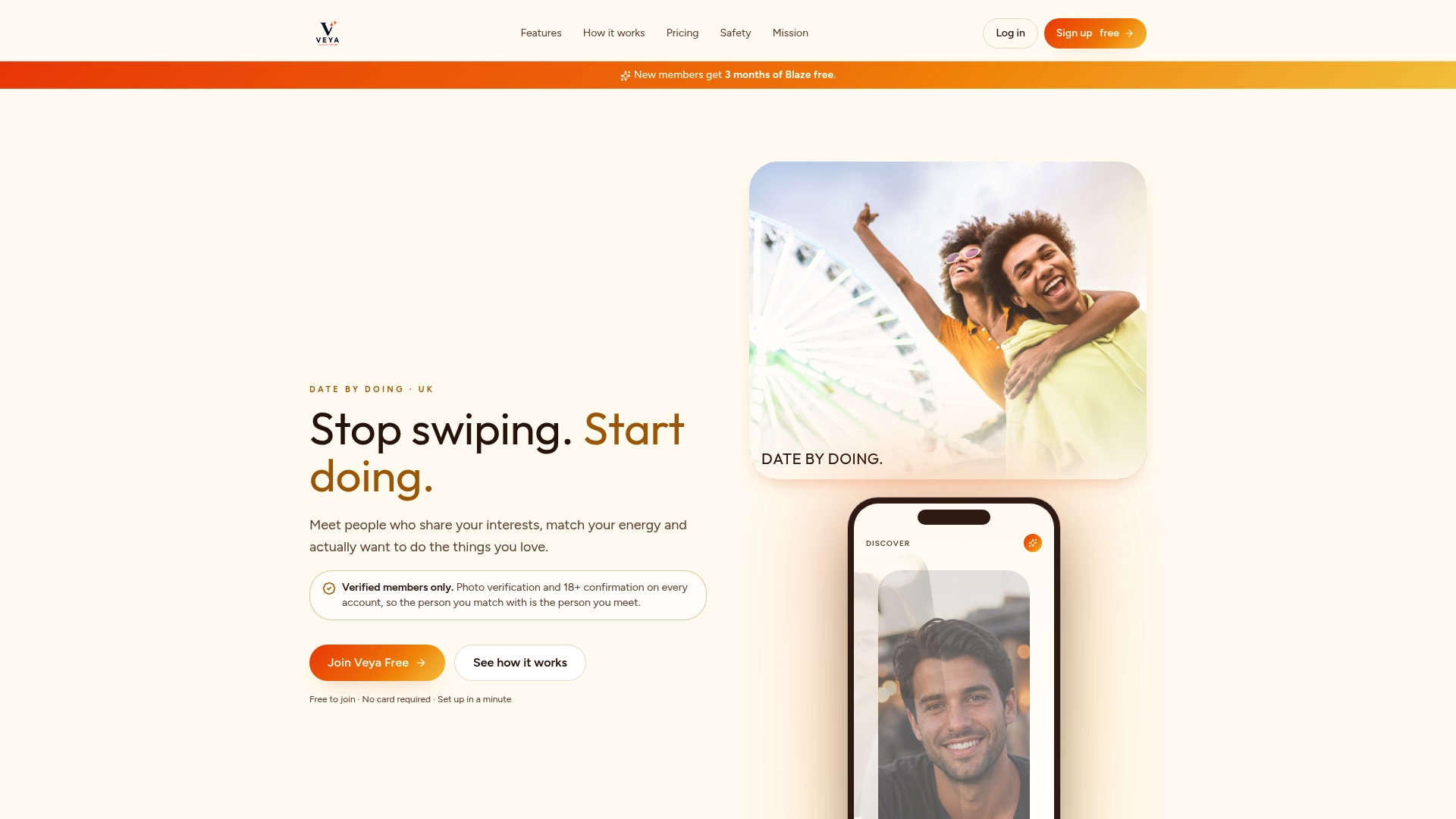
Ready to put these questions to use? See how Veyadate works and find someone worth asking them to.